While preparing an international conference or business meeting with clients, partners or suppliers, one cannot help stereotypes coming to mind. Either in form of a “funny” joke, a simple cliché, or sometimes a bias of more serious nature. When dealing with another nation or cultural group, comparisons are always present, even if they are only based on vague images or a recent media-initiated comment. The truth is, stereotypes are omnipresent, and it’s difficult to ignore them.
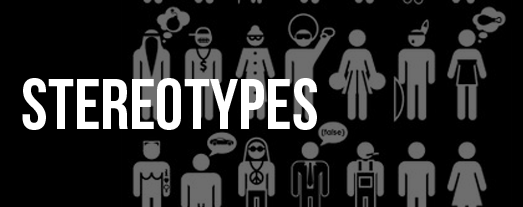
Where do stereotypes come from? Well, as the English Cross-Culturist Richard Lewis formulated it two decades ago, they arise from the collected wisdom of a particular country or cultural group; experiences passed down and adjusted by hundreds of generations and translated into today’s core beliefs, ideas, behaviours, and emotions. Values with direct impact to how people listen, communicate, operate, negotiate, and generally engage in international business. And this simply means that stereotypes do indeed come from somewhere; they have an origin, and probably very good reasons to be here.
Where do they come from?
• Pure facts are one source (of bias); for example: Americans do enjoy rough business negotiations. They can even employ foul language and provocation, until they come to term, find solutions, and then part from each other with appreciation about their ‘fight’ for a deal. It’s part of their cultural heritage; it’s the way Americans like to do business. So, if a European salesman prefers the subtle and gentle acquisition manner, he may be better working in Asia or Latin America.
• Personal experiences also account for prejudices – although it must be questioned then immediately, whether a particular experience was a stand-alone incident, or whether indeed it represents the ‘national DNA’ of a country, a cultural group or even a global enterprise.
• Media plays a substantial role in creating stereotypes. Political events, social unrest, but also natural disasters or terrorist attacks do forward images, correct or wrong, which quickly circulate the globe. Take Silvio Berlusconi, for example, a man who has been using and abusing his political position and financial resources to adjust any given issue so that it suits his personal needs. Whether you like him or not, over the years he has substantially added & formatted the image on Italians: macho, above the law, street-smart and life-lovers. To the better or to the worse, over 15 years, Berlusconi influenced the international image about Italian man.
• Even quicker are social medias; and even more unforgiving. One powerful picture – travelling on twitter and facebook – can tell a story, and by doing so, creates stereotypes for years to stay. Remember the ‘burning men’ of South Africa, just prior to the World Cup? That picture, with seemingly inactive policemen watching the Zimbabwean burn, “suggested” that the police did not help that poor chap. Videos appearing only later proofed the contrary, fortunately. But that one picture already did its harm.
Apply cautiously, and adjust
Yet, while the world often generalises when referring to other cultures, two items must be remembered: First, whatever general (national or group) cliché there is, there are always individual differences. Every person possesses a very individual collecting programming; a result of his or her path, upbringing, education, and the surrounding people and interest groups. So, one must be careful to judge a new business partner or foreign staff based on such national tendencies.
Second, and that is what’s relevant when launching an international business, generalizations can indeed assist us anticipating how a particular culture may or will behave or react. The more we learn about a new market or staff joining through a Merger or Acquisition, be it through quick Wikipedia-readings or elaborate Cross Cultural seminars, the better we can anticipate how business will run.
As long as we apply stereotypes and clichés as accurately as possible, and consciously too; as long as we use it descriptively and not evaluatively, and as long as we are ready to question and modify those stereotypes, we can really improve our international performance. First of all, anyway, respect is always required - regardless of any differences.